
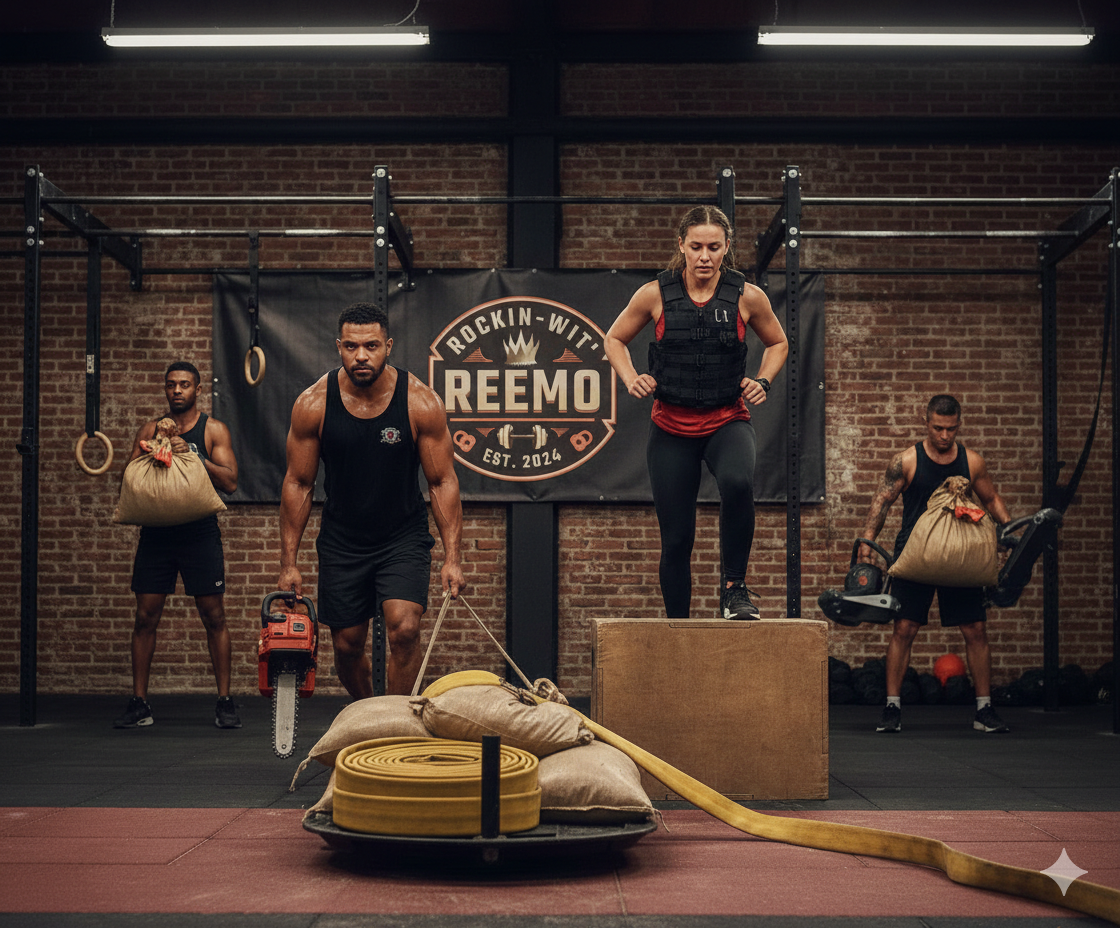
Building a firefighter strength training routine is not about looking fit in the gym—it’s about preparing your body for real job demands like climbing stairs with gear, dragging hoses, lifting heavy equipment, and performing rescues under fatigue. A strong program develops functional strength, grip endurance, core stability, and conditioning under load so you can perform safely and efficiently on the fireground.
Training approaches used in firefighter-focused programs (like those from Rockin with Reemo) emphasize compound lifts, loaded carries, stair conditioning, and CPAT-style circuits that closely mirror real emergency tasks.
Below is a simple step-by-step guide to building your own effective firefighter strength training routine.
Step 1: Build Your Foundation (Weeks 1–4)
Before heavy lifting or intense circuits, focus on movement quality and aerobic base.
Key goals:
- Improve cardio endurance
- Learn proper lifting form
- Build basic strength capacity
- Strengthen joints and core
Weekly structure (example):
- 2 strength days
- 2 conditioning days
- 1 active recovery day
Core exercises:
- Squats (bodyweight → goblet squat)
- Deadlifts (light/moderate)
- Push-ups
- Rows
- Step-ups
Conditioning:
- 20–30 min steady cardio (run, bike, or stair climber)
- Light ruck walks (optional 15–25 lbs)
This phase builds the base needed for fireground demands like sustained effort and stair climbing.
Step 2: Build Functional Strength (Weeks 4–8)
Now you start training like a tactical athlete, not a bodybuilder.
Key focus:
- Compound strength
- Load carrying ability
- Grip endurance
- Core stability under fatigue
Strength days (2–3x/week):
- Back squat or front squat: 4×5
- Romanian deadlift: 3×6–8
- Overhead press: 3×6–10
- Pull-ups or lat pulldown: 3×max or 4×8
Firefighter-specific movements:
- Farmer’s carries (heavy)
- Sandbag carries
- Sled push/pull
- Weighted step-ups
These movements directly replicate tasks like hose dragging, ladder carrying, and victim rescue.
Step 3: Add Fireground Conditioning (Weeks 6–10)
This is where you build real job stamina under pressure.
Conditioning methods:
- Stair climber intervals (very important for CPAT)
- HIIT circuits (burpees, sled pushes, sprints)
- Ruck training (25–50 lbs)
- Circuit training under fatigue
Example circuit:
- 5 min stair climb
- 40m farmer carry
- 10 burpees
- 20 kettlebell swings
- 30–60 sec rest → repeat 3–5 rounds
Firefighter conditioning is about repeated effort under fatigue—not steady gym sets.
Step 4: Train Grip & Core (Ongoing)
Grip failure is one of the most common reasons candidates struggle in CPAT-style tests.
Grip training:
- Dead hangs (max time)
- Farmer’s carries
- Plate pinches
- Towel pull-ups
Core training:
- Planks
- Pallof presses
- Hanging knee raises
- Ab wheel rollouts
A strong core improves lifting, crawling, and balance while carrying gear.
Step 5: Integrate CPAT-Style Simulation
Once a week, simulate real job conditions.
Sample CPAT circuit:
- Stair climb (5–10 min)
- Hose drag or sled pull
- Dummy/sandbag drag
- Ladder raise simulation
- Carry heavy loads under time pressure
This builds both physical readiness and mental toughness.
Step 6: Progress Overload Gradually
Every 1–2 weeks:
- Increase weight by 5–10%
- Add 1 extra set OR round
- Reduce rest time slightly
- Extend cardio duration
Consistency matters more than intensity spikes.
Step 7: Recovery (Non-Negotiable)
Firefighter training is demanding—recovery is part of the program.
Must-haves:
- 7–9 hours sleep
- Proper hydration
- Protein + carbs after workouts
- Mobility work (hips, shoulders, back)
- 1–2 rest days weekly
Without recovery, performance drops quickly under high workload training.
Weekly Firefighter Routine Example
Day 1: Lower body strength + carries
Day 2: Conditioning intervals (stairs/sprints)
Day 3: Upper body strength + grip
Day 4: Active recovery or mobility
Day 5: Full firefighter circuit (CPAT style)
Day 6–7: Rest or light cardio
Why This Routine Works
This structure prepares you for:
- Stair climbs with heavy gear
- Dragging hoses and victims
- Carrying ladders and equipment
- Working under fatigue and heat stress
- Passing CPAT and academy physical tests
It builds what firefighters actually need: strength + endurance + durability under pressure.
Final Thoughts
A strong firefighter strength training routine is built step by step—starting with a solid foundation, progressing into functional strength, and finishing with job-specific conditioning. The goal is not just passing the CPAT but becoming physically prepared for real fireground demands.
Programs like those from Rockin with Reemo focus on this exact principle: training like a tactical athlete so your body performs when it matters most.
FAQs
Most effective programs use 4–6 training days with a mix of strength, conditioning, and recovery.
Compound movements like squats, deadlifts, and carries are essential for job performance.
Use stair climbing, hose drags, dummy carries, and circuit-style workouts that mimic test events.
Both are critical—strength for lifting and carrying, cardio for endurance under pressure.
Most people see major improvements in 8–12 weeks with consistent training.
It directly affects your ability to hold tools, drag hoses, and perform rescues.
Yes, but they should start with a foundation phase before advancing to heavy or high-intensity work.