

In the firefighting world, your body is the most vital instrument. When you’re lugging 100 pounds of equipment to a higher level or dragging an injured person to safety in the smoke in a zero-visibility area, the physical condition of your body is the difference between success and catastrophe. What is the best way to measure the level of readiness? This is where the fitness tests for firefighters are a key element.
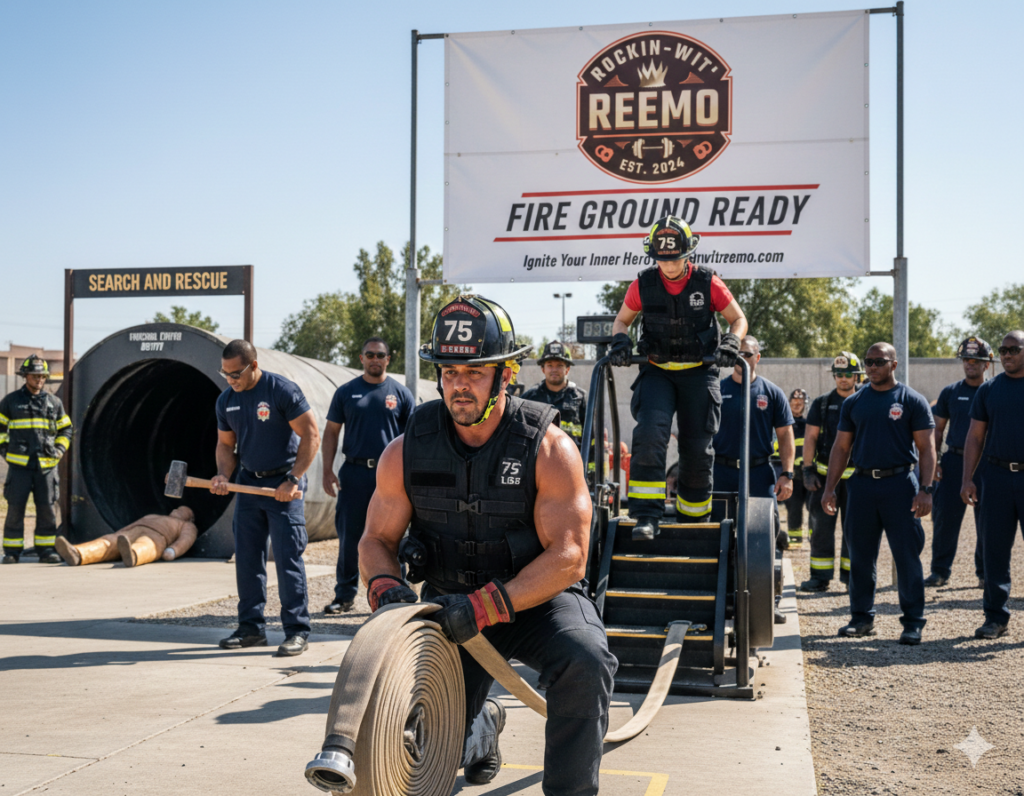
If you’re looking to join the fire service or are an experienced veteran seeking to keep “Fire Ground Ready,” knowing the intricacies of these physical tests is essential. Here at the Rockin Wit Reemo, we’ve witnessed firsthand how proper preparation can turn the least prepared candidate into an elite firefighter. This guide explains what a firefighter fitness test is, why it’s important, and how you can prepare to pass it.
Defining the Fit Test for Firefighters
When people inquire, “What is a fit test for firefighters? ” They are typically speaking of two options: the Candidate Physical Ability Test (CPAT) or the NFPA 1582 physical and medical assessment. The CPAT serves as the “gatekeeper” for hiring an employee, and the annual fitness test ensures that active-duty personnel can perform under the most extreme conditions.
A fitness assessment to be a firefighter isn’t just a fitness exercise; it’s an authentic simulation of firefighter tasks. It tests your endurance, muscular endurance, and functional strength while wearing weighted vests that mimic the load of structural firefighting equipment.
Why Do Fire Departments Require a Fit Test?
Firefighting is one of the toughest jobs you can do on earth. As per NFPA statistics, sudden cardiac arrest continues to be the leading cause of line-of-duty deaths. A thorough fitness assessment for firefighters can help:
- Be sure to prioritize others’ safety: If you can’t get yourself and your gear out of the way and out of the way of equipment, you won’t be able to save other people.
- Reduces the rate of injuries: Functional fitness protects joints and the back from the demands of your work.
- Baseline Performance: This gives coach Reemo and other instructors an indicator of areas where you need more stamina or power.
Core Components of the Fit Test for Firefighters
The majority of standardized tests, including the CPAT, consist of eight distinct tests that must be completed in a continuous sequence. Here’s a brief overview of the tests you’ll be taking:
1. The Stair Climb
This is often the initial and hardest component of the fitness assessment for a firefighter. Candidates must climb a stair-stepper for over 3 minutes while wearing a 75-pound vest. This is a simulation of carrying a high-rise backpack up multiple levels of stairs.
2. Hose Drag
You’ll hold the hose line, then walk or sprint for 75 feet, after which you fall to a knee and then pull at least 50 feet of line into a specified box. tests your lower-body power and grip strength.
3. Equipment Carry
Firefighters aren’t content with carrying themselves; they carry saws, fans, and other tools. For this section of the fitness tests for firefighters, you’ll need to select two power saws, carry them 75 feet to the target, and return.
4. Ladder Raise and Extension
This test measures the strength of your upper body. The participant must “walk” the extension of a 24-foot ladder to an upright position, and then make a hand-over-hand motion to lower and extend the fly section on another ladder.
5. Forcible Entry
Using a 10-pound sledgehammer, strike the instrument to measure until it buzzes. It’s like breaking through an entranceway to an open fire.
6. Search and Rescue Drag
It is perhaps the most “human” aspect in the entire test. You have to navigate a dark tunnel filled with obstacles, then carry a 165-pound mannequin 70 feet. This is the moment when the “Fire Academy Prep” is truly worth it.
Insights from the Fire Floor: Making Your Training Count
As an FDNY Training Instructor for the Fitness Unit Coach, Reemo is aware that many applicants fail the fitness tests in the field of firefighters, not because they’re “strong” in a conventional sense, but rather because they don’t have the functional strength.
My Unique Insight: Most people train like bodybuilders–focusing on chest day or leg day. However, the fireground isn’t concerned about your bicep’s peak. To pass the firefighter fitness exam, you must have “work capability.” This is the process of training the body’s system to eliminate lactic acid when you are 90 percent of its maximum.
We at the Rockin Wit Reemo focus on “odd objects” training. Instead of using barbells and sandbags, we train with weighted vests, sandbags, and sleds. This is akin to the shifting weight of a person or the water-filled hose.
How to Prepare for Your Fit Test for Firefighters
The preparation process isn’t just a sprint over a few weeks. It’s a way of life. If you’re looking to be top and be prepared to compete, you must follow these three pillars of preparation:
Progressive Overload Using Weighted Vests
It’s impossible to be present on testing day if you’ve been in shorts and a t-shirt, expecting your body to take on 75 pounds more. Begin by walking with a vest weighing 20 pounds, and gradually increase the weight.
Focus on Posterior Chain Strength
The fitness check for firefighters can be won or lost in the hamstrings, glutes, and lower back. Deadlifts, kettlebell swings, and lunges are your most reliable buddies. These moves lay the foundation for the rescue drag and equipment transport.
High-Intensity Interval Training (HIIT)
Because tests are timed (usually 10-15 minutes, 20 seconds for CPAT), your cardiovascular workout must be fast and explosive. Speeds, as well as “EMOM” (Every Minute on the Minute) exercises, are crucial for replicating the “stop-and-go” characteristic of ground firefighter activities.
Common Mistakes to Avoid
- Neglecting Grip Strength. Many people fall short of the pull of a hose or ladder extension because their forearms loosen.
- Poor Hydration. The fitness test of firefighters is usually performed in equipment that traps heat. If you’re dehydrated, you’ll cramp before your search.
- Ignoring technique: There is a “right method” to move a mannequin, and there is a “right method” to move a Sledge. Efficiency helps save energy and air.
The Rockin Wit Reemo Advantage
If you’re finding yourself overwhelmed by the demands of the firefighter fitness test, it’s not necessary to do it all on your own. Our programs are specifically designed to meet the needs of an “everyday hero.” No matter if you’re living in New York, looking for in-person group fitness classes, or to sign up for our online coaching app, we provide the framework to help you succeed.
Our training isn’t only about helping you pass an exam; it also helps you build an impressive career. We concentrate on Fire Ground Readiness to ensure that when the bells ring, you are confident and have the physical ability to do your job.
Summary: Success Starts Today
The fitness tests required for firefighters are a tough but essential hurdle. It requires respect, discipline, and a specific fitness regimen. If you understand that the fitness assessment is a test for firefighters and is an examination of your physical capability, you can alter your focus of training from “looking nice” to “doing well.”
Are you willing to become an icon? Don’t give your career to fate. Begin your journey by taking the dedicated firefighter fitness test program now.
Check out Rockin Wit Reemo to reserve a class or download our training application. Let’s get you prepared for the floor of fire.
Boost your performance with our firefighter training program built for real-world demands. Our firefighter workout program includes firefighter strength training and proven firefighter CPAT workout routines.
Read more about: 7 Essential Exercises Every Fire Academy Candidate Should Master
Frequently Asked Questions
1. What is a firefighter fit test?
A physical assessment that tests whether you can perform job-specific tasks—not just general fitness.
2. How long does it take?
Most CPAT-style tests are around 10 minutes, but they demand nonstop effort.
3. What’s the hardest part?
For most people, the stair climb. It sets the tone for everything else.
4. How should I prepare?
Train for the tasks, not just the gym.
5. Can I retake it?
Usually yes—but you’re better off preparing to pass the first time.