
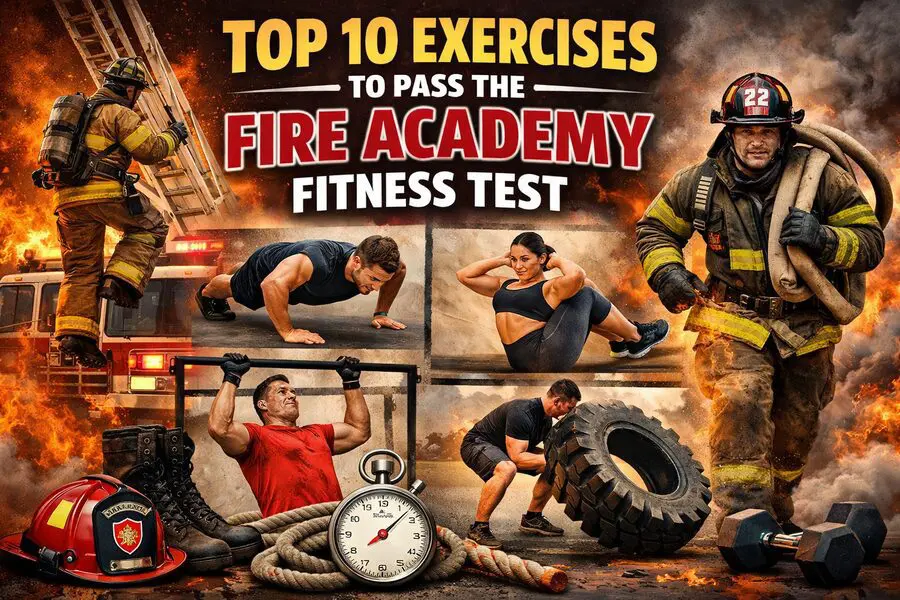
Becoming a firefighter isn’t just about courage—it demands peak physical fitness, endurance, and mental toughness. The Fire Academy Fitness Test is designed to push your limits, simulating real-life emergency scenarios where strength and stamina can make all the difference. If you’re preparing for it, the right training strategy is essential.
At Rockin Wit Reemo, we understand that passing the Fire Academy Fitness Test requires more than just hitting the gym randomly. You need targeted exercises that build functional strength, improve cardiovascular endurance, and enhance mobility. In this guide, we’ll break down the top 10 exercises to pass the Fire Academy Fitness Test, helping you train smarter and perform better.
Why Training for the Fire Academy Fitness Test Matters
The Fire Academy Fitness Test typically includes tasks like stair climbs, hose drags, equipment carries, and victim rescues. These activities demand a combination of:
- Strength
- Endurance
- Agility
- Core stability
Focusing on the right exercises ensures you’re prepared for every challenge the test throws at you.
1. Stair Climbing with Weight
Stair climbing mimics one of the most common firefighter tasks—ascending stairs with heavy gear.
How to do it:
- Use a stair machine or real stairs
- Add a weighted vest or dumbbells
- Maintain a steady pace for 5–10 minutes
Why it works:
This exercise builds leg strength and cardiovascular endurance, both crucial for the Fire Academy Fitness Test.
2. Deadlifts
Deadlifts are essential for developing full-body strength, especially for lifting heavy equipment or rescuing victims.
How to do it:
- Keep your back straight
- Lift through your heels
- Engage your core
Pro tip: Focus on proper form to avoid injury and maximize strength gains.
3. Farmer’s Carry
This exercise simulates carrying heavy tools or equipment.
How to do it:
- Hold heavy dumbbells or kettlebells in each hand
- Walk a set distance (20–40 meters)
- Keep your posture upright
Why it works:
It improves grip strength, endurance, and overall stability—key components for the Fire Academy Fitness Test.
4. Push-Ups
Push-ups are a fundamental bodyweight exercise that builds upper-body strength.
How to do it:
- Keep your body in a straight line
- Lower yourself until your chest nearly touches the ground
- Push back up explosively
Why it works:
Strong arms and chest muscles are essential for tasks like pushing doors or handling hoses.
5. Pull-Ups
Pull-ups are excellent for building upper-body and back strength.
How to do it:
- Grip the bar slightly wider than shoulder-width
- Pull your chin above the bar
- Lower yourself with control
Pro tip: If you’re a beginner, use assisted pull-up machines or resistance bands.
6. Sled Push and Pull
This exercise closely replicates real firefighting movements like dragging hoses or equipment.
How to do it:
- Load a sled with a weight
- Push it across a distance
- Turn around and pull it back
Why it works:
It develops the explosive power and endurance needed for the Fire Academy Fitness Test.
7. Plank Holds
Core strength is often overlooked but is critical for stability and injury prevention.
How to do it:
- Keep your body straight from head to heels
- Engage your core
- Hold for 30–60 seconds or longer
Why it works:
A strong core improves performance in almost every Fire Academy Fitness Test activity.
8. Box Step-Ups
Box step-ups simulate climbing stairs or stepping over obstacles.
How to do it:
- Use a sturdy box or bench
- Step up with one leg, then bring the other up
- Alternate legs
Pro tip: Add weights to increase difficulty and build strength faster.
9. Battle Ropes
Battle ropes are great for building endurance and upper-body strength.
How to do it:
- Hold one rope in each hand
- Create waves by moving your arms up and down
- Continue for 30–60 seconds
Why it works:
It improves cardiovascular fitness and muscular endurance—both essential for the Fire Academy Fitness Test.
10. HIIT (High-Intensity Interval Training)
Firefighting is unpredictable and intense, making HIIT training highly effective.
How to do it:
- Alternate between intense exercise and short rest periods
- Example: 30-second sprint, 30-second rest
Why it works:
HIIT boosts stamina, burns fat, and prepares your body for sudden bursts of activity.
Training Tips to Pass the Fire Academy Fitness Test
To maximize your results, keep these tips in mind:
- Train consistently: Aim for at least 4–5 workouts per week
- Focus on functional fitness: Train movements, not just muscles
- Stay hydrated and eat well: Nutrition plays a huge role in performance
- Practice test simulations: Mimic real Fire Academy Fitness Test conditions
Final Thoughts
Passing the Fire Academy Fitness Test isn’t about being the strongest person in the room—it’s about being prepared, consistent, and resilient. By incorporating these top 10 exercises to pass the Fire Academy Fitness Test into your routine, you’ll build the strength and endurance needed to succeed.
At Rockin Wit Reemo, we believe in training with purpose. When you focus on the right exercises and stay disciplined, you’re not just preparing for a test—you’re preparing for a career that saves lives.
Start training today, stay committed, and you’ll be one step closer to crushing the Fire Academy Fitness Test.
Read more about: Firefighter Fitness Challenge
Frequently Asked Questions
1. What exercises should I prioritize?
Stairs, carries, sled work, pull-ups, and full-body circuits. Train movements, not just muscles.
2. How often should I train?
4–5 structured sessions per week. Consistency beats intensity done randomly.
3. Is cardio important?
Absolutely. Without it, everything else falls apart under fatigue.
4. Can beginners pass the test?
Yes—but only if they train with intention, not guesswork.5. How long should I prepare?
6–8 weeks minimum. More if you’re starting from a low fitness level.